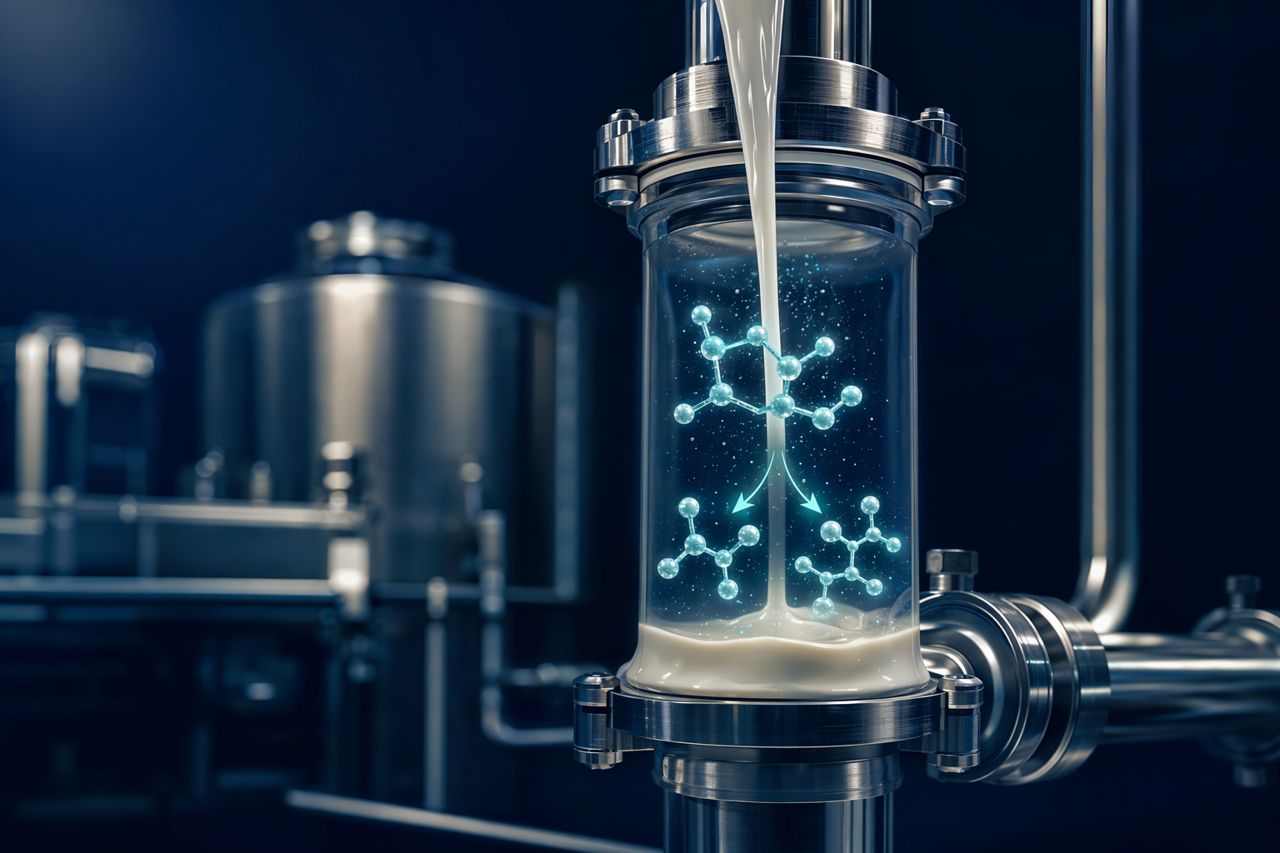
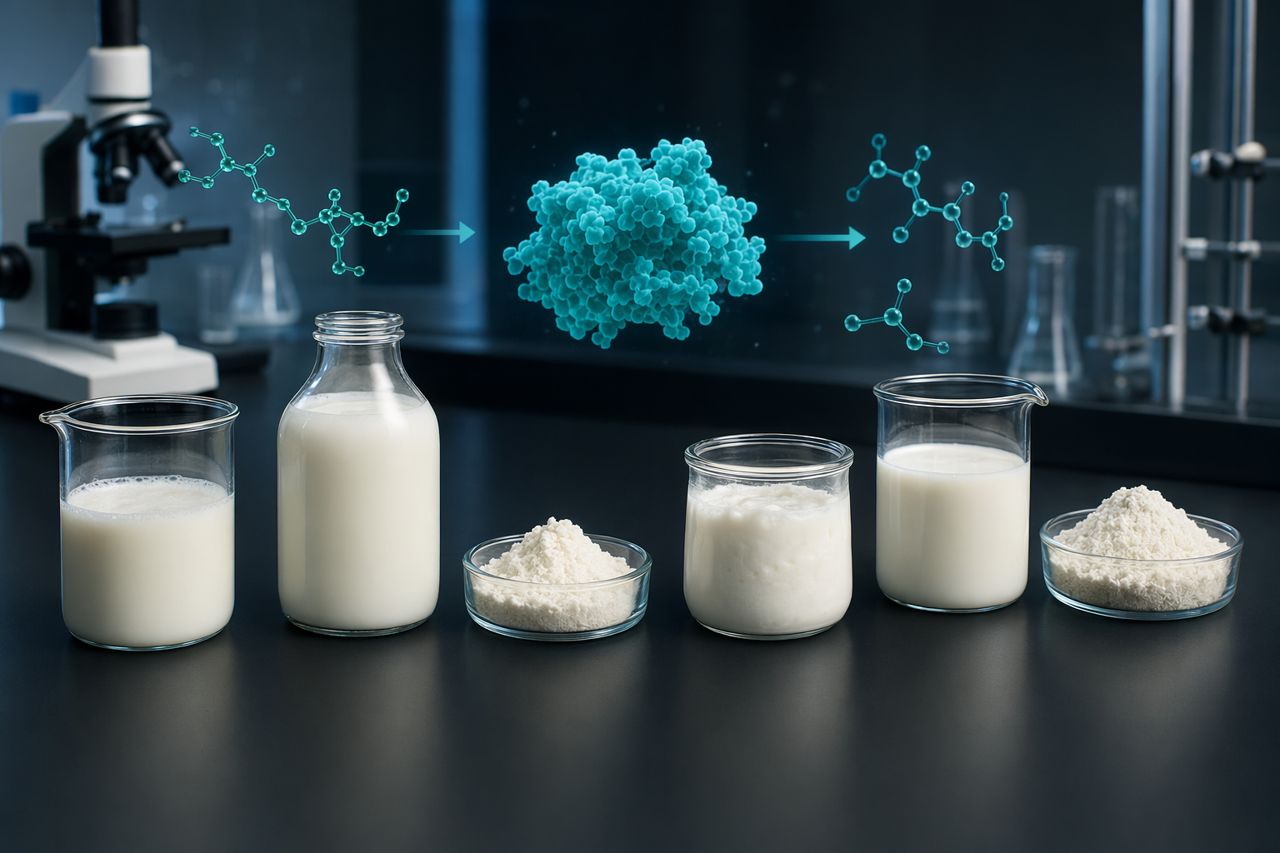
Lactase is the enzyme used to break down lactose, the natural milk sugar found in dairy streams, whey streams, and lactose-containing ingredients. Its proper enzymatic name is Lactase (β-Galactosidase).
For a dairy, an ingredient maker or a distributor, lactase is something you buy by the kilogram: a processing aid that controls lactose content, sweetness, lactose-free claims and crystallization in dairy products. We supply it in bulk; this page explains what you are buying.
Wholesale and bulk supply for manufacturers and resellers. Request a quote with the product, the quantity and the delivery country. Prices and lead times are quoted per order.
Lactase, Defined for Industrial Use
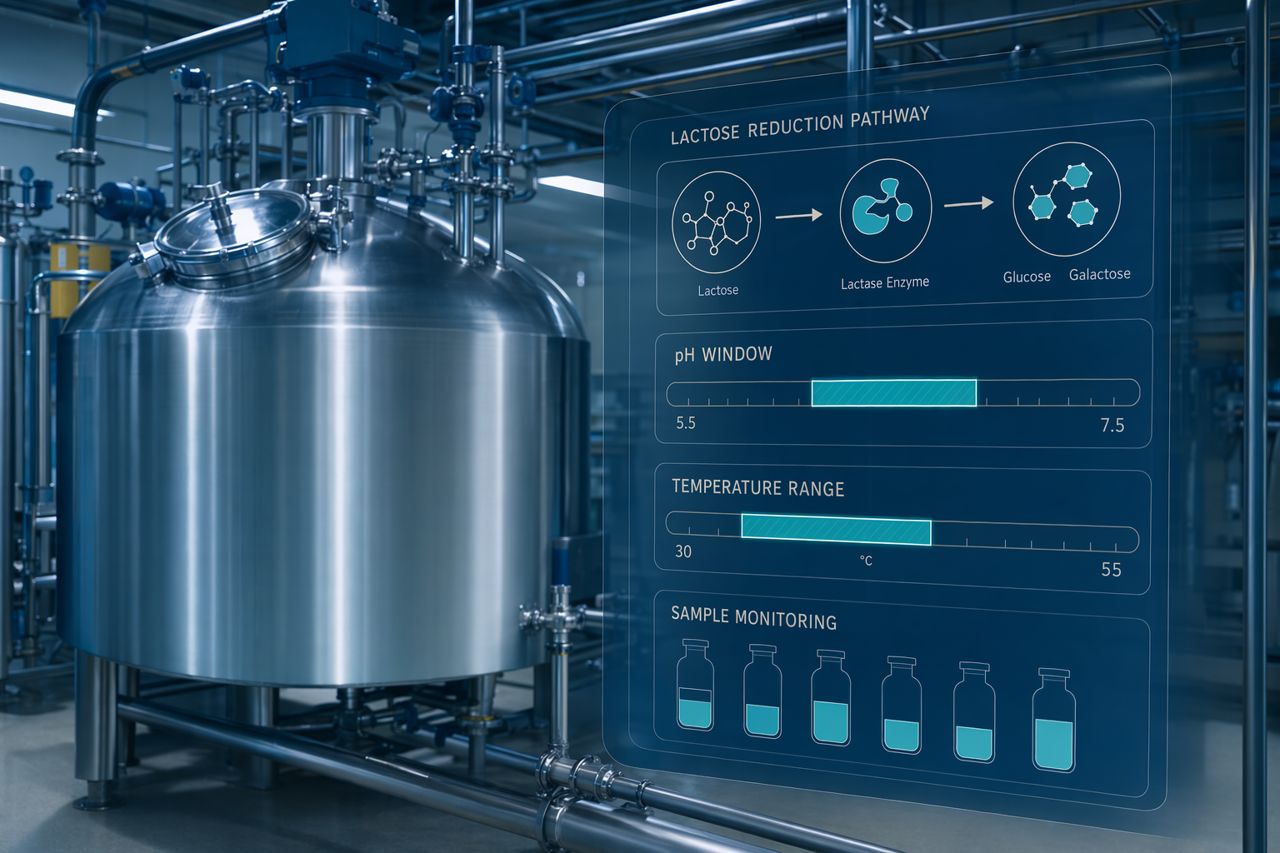
Lactase catalyzes the hydrolysis of lactose into two simpler sugars:
- Glucose
- Galactose
This conversion matters commercially because lactose behaves differently from its breakdown products. Lactose is less sweet, less soluble, and can create texture challenges in concentrated or frozen dairy applications. Glucose and galactose provide higher perceived sweetness and improved solubility behavior, helping processors adjust product performance without simply adding more sweetener.
In practical terms, lactase helps manufacturers convert a difficult sugar into more manageable components inside the process.
Why Is Lactase Also Called β-Galactosidase?
The name β-galactosidase describes the enzyme’s function more technically. Lactose contains a beta-galactosidic bond between galactose and glucose. Lactase targets that bond and splits the molecule.
Both names are commonly used:
- Lactase is the market-facing and food-processing term.
- β-Galactosidase is the biochemical and specification-facing term.
When reviewing supplier documentation, product data sheets, or formulation records, buyers may see either name. In B2B procurement, the key is confirming that the enzyme format, processing range, substrate fit, and documentation package match the intended application.
What Does Lactase Do in Dairy Processing?
Lactase enables controlled lactose reduction before, during, or after key dairy process steps, depending on the product design.
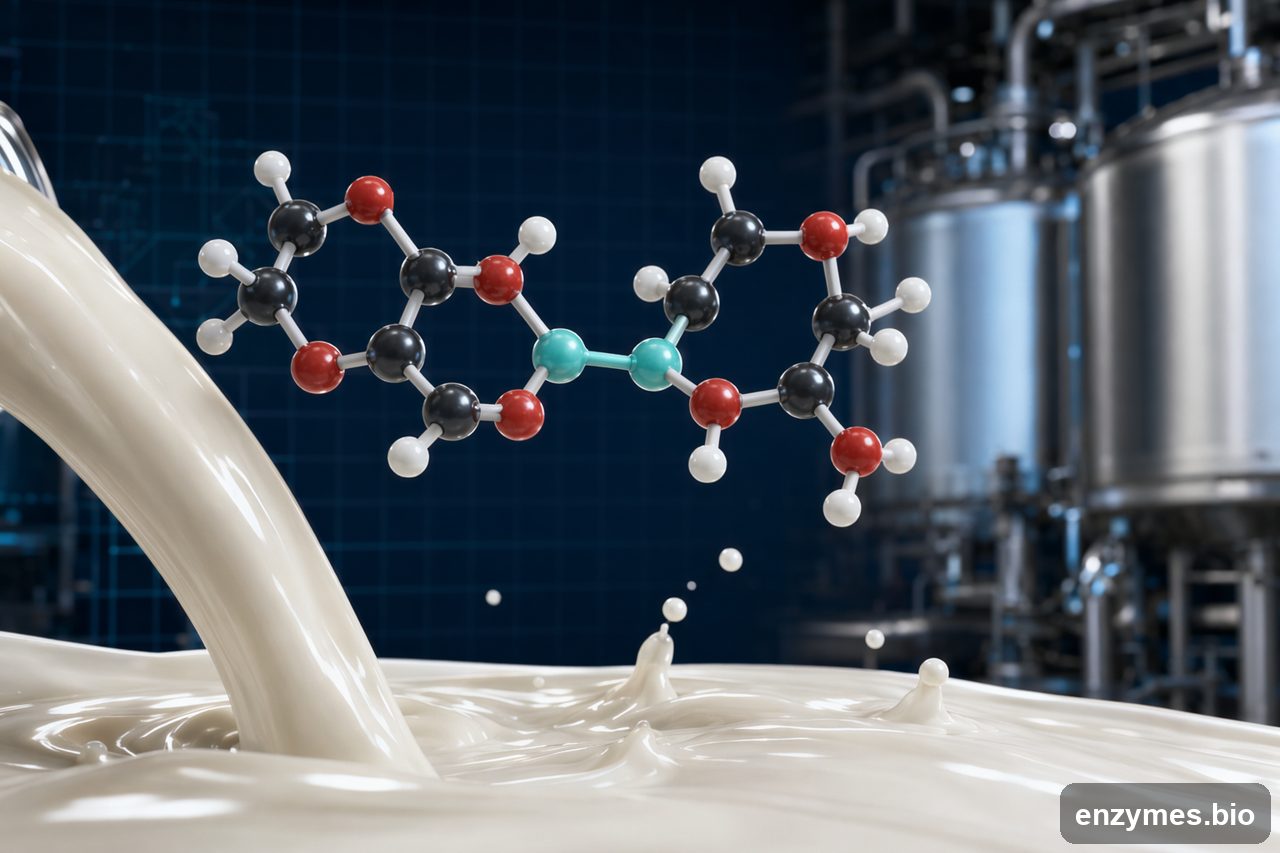
Common processing objectives include:
- Producing lactose-free or lactose-reduced milk
- Improving sweetness perception without increasing added sugar
- Reducing lactose crystallization in ice cream, condensed milk, and dairy concentrates
- Supporting smoother texture in high-solids systems
- Improving fermentable sugar availability in selected cultured applications
- Enhancing consistency in dairy ingredients used downstream
The value is not only nutritional. Lactase can change the way a dairy system handles heat, concentration, freezing, storage, and mouthfeel.
Where Lactase Is Used
Fluid Milk and Lactose-Free Dairy
In fluid milk, lactase is used to reduce lactose while preserving the familiar dairy profile. Hydrolysis increases perceived sweetness, so processors often need to balance conversion level, heat treatment, flavor expectations, and shelf-life targets.
Ice Cream and Frozen Dairy
Lactose can crystallize in frozen or concentrated systems, creating sandiness and quality drift. Lactase helps reduce that risk by converting lactose into more soluble sugars, supporting smoother sensory performance over storage.
Yogurt and Cultured Dairy
In cultured dairy, lactase may support lactose reduction and influence sugar availability for fermentation. Process timing matters because enzyme behavior, culture performance, acidity, and finished-product texture are connected.
Whey and Dairy Ingredients
Whey streams and dairy solids can carry significant lactose. Lactase treatment can improve ingredient functionality, reduce lactose-related handling limitations, and support product claims for downstream manufacturers.
Bakery, Nutrition, and Prepared Foods
Lactase-treated dairy ingredients can be used where formulators need dairy taste, cleaner label architecture, and controlled sugar behavior. The enzyme step often happens upstream, before the ingredient reaches the final manufacturer.
Operational Factors That Influence Lactase Selection
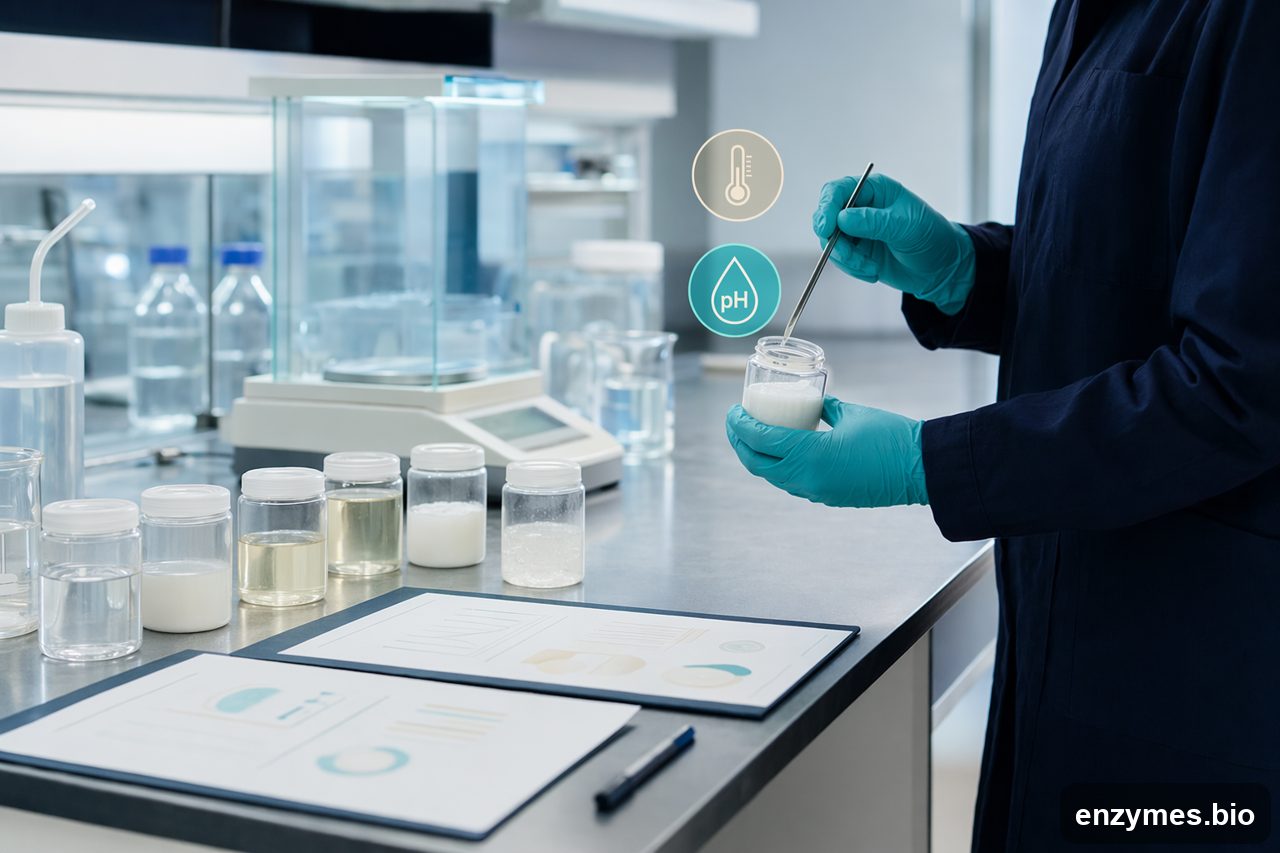
Not every lactase is interchangeable. Commercial performance depends on the enzyme source, formulation, process conditions, and target product.
Key selection factors include:
- Application pH: Neutral dairy systems and acidic fermented systems may require different lactase profiles.
- Temperature exposure: The enzyme must fit the process window without creating unnecessary hold-time pressure.
- Substrate type: Milk, cream, whey, permeate, concentrates, and formulated bases behave differently.
- Desired conversion level: Full lactose reduction and partial sweetness adjustment require different control strategies.
- Process sequence: Enzyme addition before heat treatment, after heat treatment, or during holding changes outcomes.
- Regulatory and documentation needs: Buyers often require specification support, allergen statements, origin details, food-grade documentation, and traceability records.
- Sensory impact: Sweetness, cooked notes, dairy freshness, and body must be managed as a system.
Lactase and Sweetness Control
One of lactase’s most useful commercial effects is sweetness lift. Because glucose and galactose taste sweeter than lactose, hydrolyzed dairy can taste sweeter even when total carbohydrate content has not increased.
This can help brands:
- Reduce added sugar pressure
- Improve consumer acceptance of lactose-free products
- Build cleaner label sweetness systems
- Maintain dairy character without excessive formulation complexity
The result is not simply “more sweet.” It is a different sweetness curve, tied directly to conversion level and product matrix.
Lactase and Dairy Stability
Lactose reduction can improve stability in products where lactose solubility is a constraint. This is especially relevant in high-solids dairy, frozen dairy, and concentrated milk systems.
By reducing intact lactose, processors can help manage:
- Gritty or sandy texture
- Crystal growth during storage
- Inconsistent mouthfeel
- Quality drift in concentrated formats
- Formulation limits in dairy-based ingredients
For technical teams, lactase can become part of a broader stability strategy alongside solids management, heat treatment, homogenization, emulsification, and packaging.
What Buyers Should Ask Before Sourcing Lactase
A strong lactase sourcing discussion should go beyond price per package. The enzyme must match the product, process, and compliance environment.
Before requesting pricing, prepare the following:
- Product type and target market
- Dairy substrate or ingredient base
- Desired lactose reduction level or claim direction
- Process temperature range and hold-time expectations
- pH range during enzyme contact
- Heat treatment sequence
- Required certifications or documentation
- Packaging preference and storage conditions
- Annual or batch-volume expectations
- Any sensory or sweetness constraints
This information helps narrow the recommendation and reduces trial-and-error during scale-up.
Commercial Benefits of Lactase
Lactase is used because it turns enzymology into measurable manufacturing value:
- Lactose reduction: Supports lactose-free and lactose-reduced product development.
- Sweetness optimization: Increases perceived sweetness from the existing dairy carbohydrate base.
- Texture support: Helps limit lactose crystallization in sensitive applications.
- Cleaner formulation: Can reduce reliance on added sweeteners or heavy reformulation.
- Process flexibility: Fits multiple dairy and ingredient workflows when properly selected.
- Specification control: a grade matched to your pH, temperature and hold time gives repeatable conversion from batch to batch.
How we supply lactase
Our stock grade is acid lactase powder in 1 kg packs, in three activity grades. For neutral liquid grades, ask us. We sell to dairies, ice cream and dessert makers, milk powder blenders, whey processors and distributors, by quote. Prices, quantities and lead times are quoted per order.
Request Lactase Pricing or Technical Fit Support
Send the product, the quantity and the delivery country through the form, with the pH and temperature at the point of dosing if you know them. We reply with the grade that fits and a price for your quantity.