Lactase in Yogurt and Fermented Dairy
Lactase gives yogurt and cultured dairy manufacturers a controlled way to reduce lactose while improving sweetness perception, fermentation behavior, and finished-product consistency. Used before, during, or in selected cases after fermentation, Lactase (β-Galactosidase) hydrolyzes lactose into glucose and galactose, changing both the nutritional profile and the processing dynamics of the milk base.
We supply lactase in bulk to yogurt and cultured dairy producers and to the distributors that serve them. For a producer the value is fewer formulation compromises, a predictable lactose target and room to cut added sugar.
Wholesale and bulk supply for yogurt makers and resellers. Request a quote with the product, the quantity and the delivery country. Prices and lead times are quoted per order.
What lactase does in a yogurt system
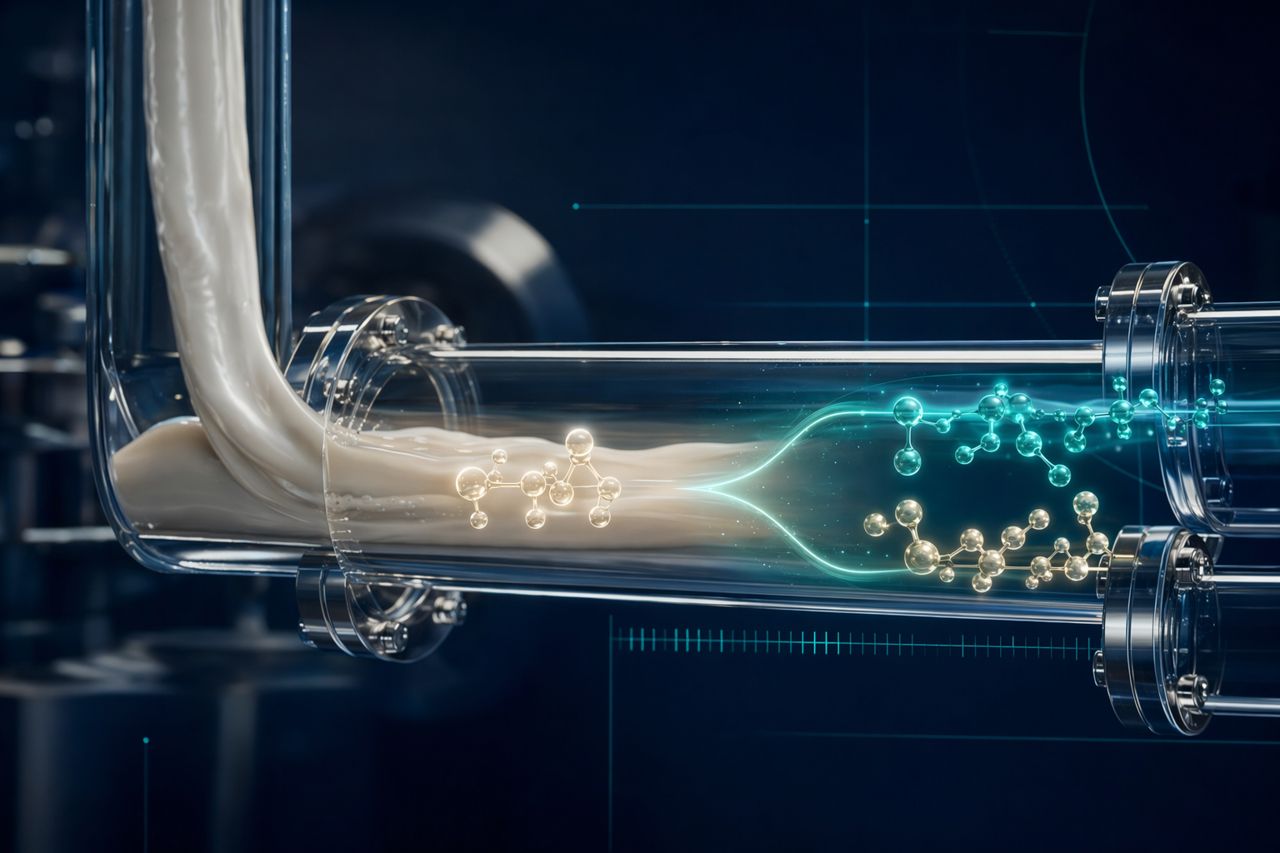
Lactase cleaves lactose, the primary milk sugar, into two simpler sugars: glucose and galactose. In yogurt and fermented dairy, that conversion can affect four commercial levers:
- Lactose reduction: supports products designed for lactose-sensitive consumers or lactose-free positioning, subject to local regulatory definitions and validated testing.
- Sweetness control: glucose and galactose taste sweeter than lactose, allowing formulators to reduce added sugar or rebalance fruit preparations.
- Fermentation response: additional simple sugars can influence acidification curves, culture activity, and end-point timing.
- Texture and stability: changes in sugar profile can interact with protein gelation, viscosity, syneresis control, and shelf-life behavior.
The enzyme does not replace culture management, heat treatment discipline, or stabilizer design. It gives process teams another controlled variable.
Where lactase fits in the process
1. Pre-fermentation hydrolysis
The most common route is treating the milk base before inoculation. Lactase is added to standardized milk, the hold is validated against the lactose target, and the base then proceeds into heat treatment, cooling, culture addition, and fermentation.
Why manufacturers use it:
- Gives strong control over lactose conversion before culture variables enter the process.
- Simplifies validation for lactose-reduced claims.
- Allows sweetness to be designed into the base rather than corrected later.
- Works well for stirred yogurt, set yogurt, drinkable yogurt, cultured milk, and high-protein fermented bases.
Process watchpoints:
- Hydrolysis increases reducing sugars, so heat treatment and storage conditions should be reviewed for flavor and color stability.
- The milk base may ferment differently after lactose conversion; culture selection and acidification targets should be confirmed at pilot scale.
- Finished sweetness may increase without added sugar, which can be useful or may require fruit-prep adjustment.
2. Addition around fermentation
Some operations evaluate lactase addition closer to inoculation or during early fermentation. This can be useful when tank utilization, scheduling, or product architecture does not support a separate hydrolysis hold.
Why manufacturers consider it:
- Reduces the need for a dedicated pre-hydrolysis step.
- May align enzyme action with existing fermentation residence time.
- Can support flexible production across multiple cultured dairy formats.
Process watchpoints:
- As pH drops, enzyme performance may change depending on the lactase grade.
- Culture competition for sugars can affect the final lactose profile.
- End-point repeatability depends on tight control of time, temperature, pH, and culture performance.
This approach should be validated with the exact milk system, culture, solids level, and thermal process used in production.
3. Post-fermentation use
Post-fermentation lactase use is more selective. Finished yogurt has lower pH, higher viscosity, and a developed protein network. Those conditions can limit enzyme access and make conversion less predictable.
It may be considered for certain cultured drinks or low-viscosity systems, but for typical spoonable yogurt, pre-fermentation or early-process addition is usually easier to control.
Commercial outcomes for cultured dairy teams
Lactose-reduced and lactose-free positioning
Consumer demand for lactose-friendly dairy remains strong, but brand teams need more than a label claim. They need a repeatable process that reaches target residual lactose across seasonal milk variation, plant conditions, and shelf life.
A robust lactase program supports:
- Defined residual lactose targets.
- Batch-to-batch process control.
- Finished-product verification plans.
- Regulatory documentation aligned to the market of sale.
- Scale-up from trial tank to commercial production.
Sugar reduction without a taste penalty
Because glucose and galactose deliver more perceived sweetness than lactose, lactase can help reduce added sucrose, syrup, or sweetener load in flavored yogurt and cultured beverages.
This is especially useful in:
- Kids’ yogurt and lunchbox formats.
- Protein-enriched cultured products.
- Fruit-on-bottom or fruit-blended yogurts.
- Reduced-sugar dairy drinks.
- Clean-label product lines where intense sweeteners are not preferred.
The key is not simply adding lactase and removing sugar. Sweetness, acidity, fruit impact, and body should be recalibrated together.
Fermentation speed and scheduling
Hydrolyzed lactose changes the sugar environment available to starter cultures. Depending on the culture blend and process design, this can support faster acidification or require adjusted fermentation control.
Manufacturers should evaluate:
- Acidification curve shape.
- Time to target pH.
- Post-acidification during chilled storage.
- Culture flavor development.
- Plant scheduling and tank turnover.
The best result is not always the fastest fermentation. The target is a predictable fermentation curve that protects flavor, texture, and throughput.
Texture, viscosity, and syneresis management
Lactase does not directly build a yogurt gel, but it can influence the environment in which gelation occurs. Sugar composition, total solids, protein level, heat treatment, culture behavior, and stabilizer system all interact.
In development trials, monitor:
- Viscosity after fermentation and after smoothing.
- Whey separation over shelf life.
- Graininess or gel brittleness.
- Stirred-yogurt shear response.
- Drinkable-yogurt suspension stability.
For high-protein or concentrated systems, hydrolysis can also affect osmotic balance and perceived density. Validate in the final formulation rather than in a simplified milk model.
Choosing a lactase grade for yogurt
Not every lactase behaves the same in cultured dairy. Selection should reflect the product format, addition point, processing temperature, pH window, and labeling requirements.
Important specification criteria include:
- Application fit: neutral-range lactase for milk-base hydrolysis, or specialized grades for lower-pH systems where relevant.
- Thermal process compatibility: performance before or around heat treatment must be validated in the intended flow.
- Flavor profile: low off-note contribution and clean dairy sensory performance.
- Microbiological quality: suitable for dairy plant risk controls.
- Documentation: allergen position, non-GMO status where applicable, kosher or halal support, country-of-origin information, and regulatory statements.
- Supply reliability: consistent manufacturing, lot traceability, and commercial volume planning.
A grade that performs well in plain milk may not automatically deliver the same outcome in high-solids yogurt, flavored bases, or protein-enriched cultured dairy.
Trial design: what to measure
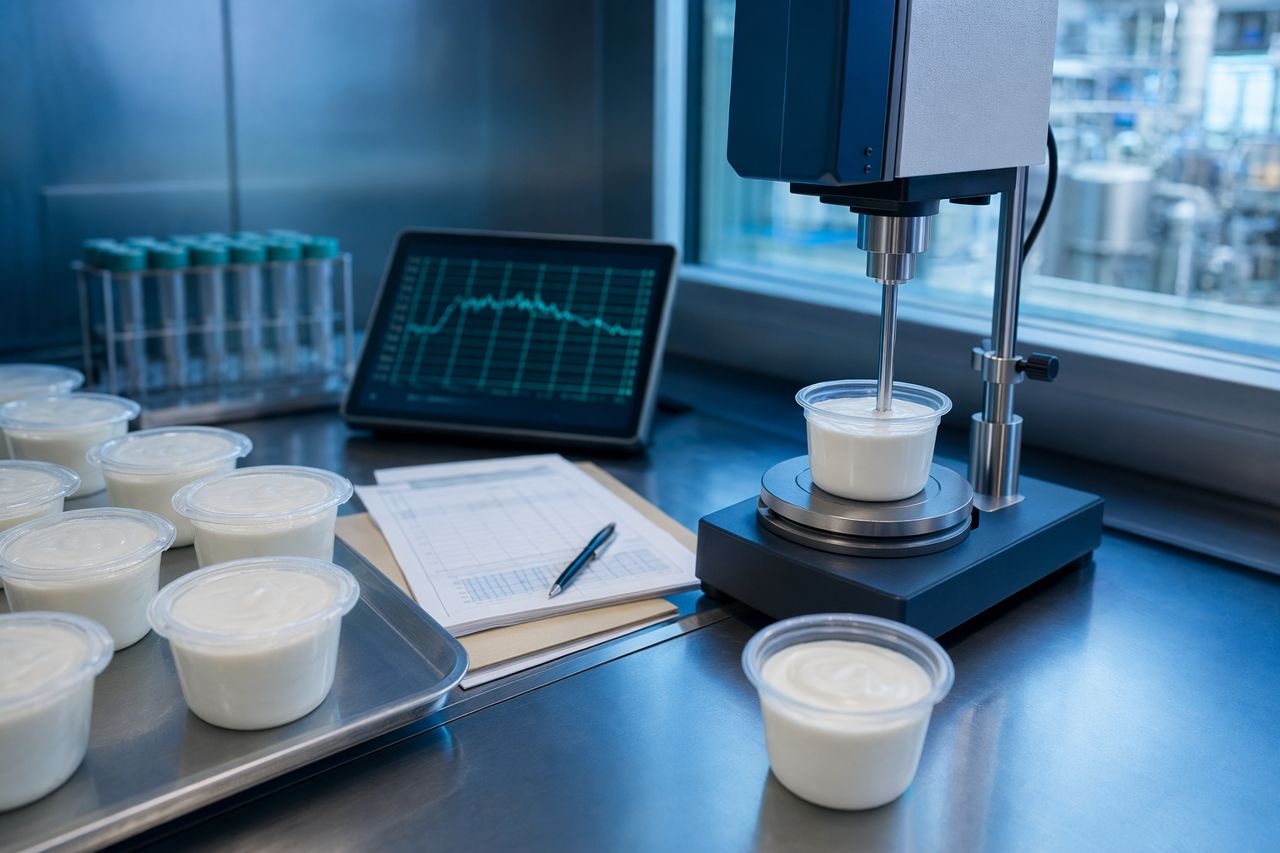
A useful plant trial should connect enzyme use to commercial acceptance criteria. The following checkpoints are typically more valuable than a single bench observation:
| Trial area | What to confirm |
|---|---|
| Lactose target | Residual lactose after processing and through shelf life |
| Fermentation | Acidification curve, end-point control, culture performance |
| Sensory | Sweetness, acidity, dairy flavor, fruit balance, off-notes |
| Texture | Viscosity, gel strength, smoothing response, syneresis |
| Shelf life | Post-acidification, stability, color, flavor drift |
| Operations | Hold time, tank use, scheduling impact, cleaning compatibility |
| Compliance | Labeling position, documentation, market-specific requirements |
For commercial scale-up, test the actual milk supply, culture system, fruit or flavor preparation, heat process, packaging format, and chilled distribution conditions.
Practical formulation notes
- Hydrolyzed milk often tastes sweeter before any added sweetener is included.
- Culture selection can shift the final acidity and flavor profile in hydrolyzed systems.
- Fruit preparations may need lower sugar or adjusted acid balance.
- Protein-enriched yogurt should be tested for viscosity and mouthfeel after hydrolysis.
- Heat treatment should be reviewed when reducing sugars are increased.
- Lactose-free positioning requires validated analytical confirmation and local regulatory review.
Specification support for manufacturers
Lactase programs are designed for procurement, R&D, QA, and production teams that need a usable ingredient file, not a vague enzyme description. Typical project support can include product specification, regulatory documentation, allergen statement, dietary certification support where available, traceability information, storage guidance, and application discussion for yogurt and fermented dairy workflows.
Request pricing or a technical quote
We supply lactase for lactose-reduced yogurt, cultured drinks and reduced-sugar fermented dairy.
Our stock grade is acid lactase powder in 1 kg packs, in three activity grades. For neutral liquid grades, ask us.
Send us:
- the product and where the enzyme goes in (before, during or after fermentation)
- the milk base pH and temperature at the point of dosing
- the quantity per order or per month
- the delivery country
Prices, quantities and lead times are quoted per order.
Need a price now? Use the inquiry form; quotes are per order.